 Famxplor
Death Valley National Park
What to expect
Death Valley National Park is a national park of the United States that straddles the California–Nevada border, east of the Sierra Nevada. The park occupies an interface zone between the arid Great Basin and Mojave deserts, protecting the northwest corner of the Mojave Desert and its diverse environment of salt-flats, sand dunes, badlands, valleys, canyons, and mountains. It is the largest national park in the contiguous United States, as well as the hottest, driest, and lowest of all the national parks in the United States. The park is home to many species of plants and animals which have adapted to the harsh desert environment, including creosote bush, Joshua tree, bighorn sheep, coyote, and the endangered Death Valley pupfish. Death Valley National Park offers something for everyone, from the magical burst of wildflower blooms in spring to the allure of ghost towns, historic mining operations, wildlife, and raw natural beauty
Plan your family visit to the Death Valley National Park with these blog insights 👇

The West Coast of the USA in a van: complete guide for your road trip
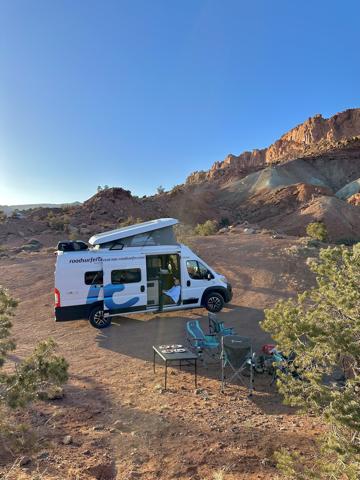
Activities: We visited Death Valley National Park, a park with beautiful landscapes, beautiful rocks, dunes, a salt desert, and more. We were lucky enough to see two rare phenomena: lots of flowers at the entrance to the park and Badwater Basin covered in water
Highlights: The kids loved exploring the dunes and the salt desert. We all enjoyed the unique and beautiful scenery of Death Valley, especially the rare phenomena we saw ✨

20 Best Things to Do in Yosemite 2024 | Yosemite Itinerary

Activities: We explored Death Valley National Park, enjoying the unique and dramatic landscape. We hiked to Zabriskie Point, Artist's Palette, Badwater Basin Salt Flats, and Furnace Creek Visitor Center, and we saw the Devil's Golf Course and the Mesquite Sand Dunes
Highlights: The kids loved exploring the unique landscape and seeing the dramatic geological formations. We all enjoyed the beauty of the park and the opportunity to learn about its history ✨

USA: Nature and national parks in the West that not everyone knows about
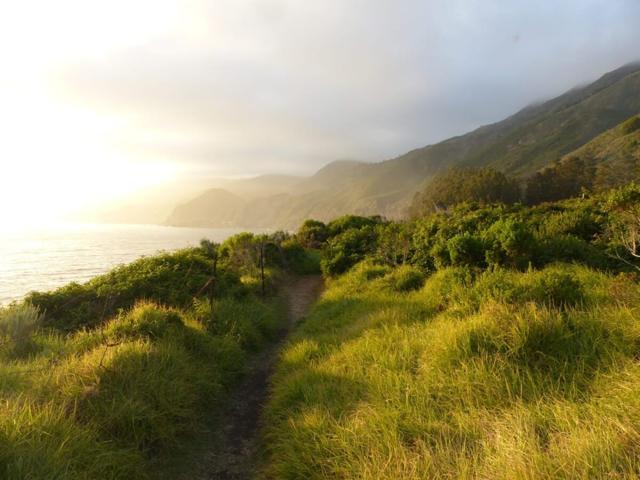
Activities: We drove to the highlights with our own vehicle. We stayed overnight. We visited the Badwater Basin, Zabriskie Point, and the Mesquite Flat Sand Dunes. We also did some hiking, including the Mosaic Canyon
Highlights: The extreme landscapes were amazing! The kids loved the sand dunes. "In the Mesquite Flat Sand Dunes, families will find an endless sandpit and a real desert feeling." Hiking in the canyon was also a hit ✨
USA road trip: Death Valley with child
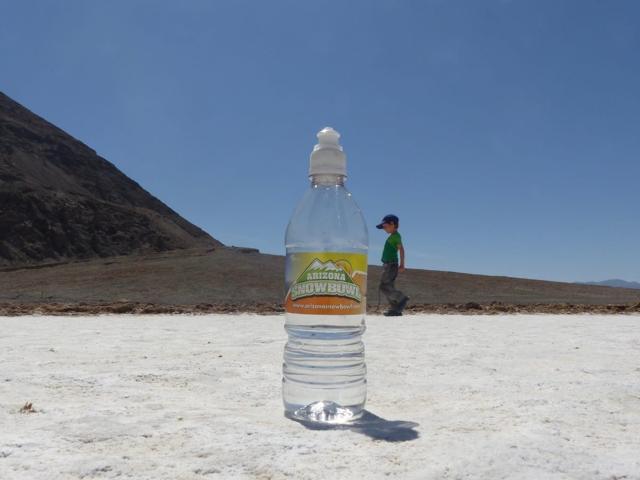
Activities: We drove through Death Valley with our child. We stopped at various points, including the salt flats and the sand dunes. We also hiked a few trails
Highlights: The child was amazed by the salt, exclaiming, "Ice!" and then realizing it was salt. We loved exploring the diverse landscapes, especially the colorful rocks of Artists Drive and the marble slides of Mosaic Canyon. We also enjoyed the mild evening at Furnace Creek ✨
Southwest USA in a motorhome with children – From greenhorn to pro in 15 stages
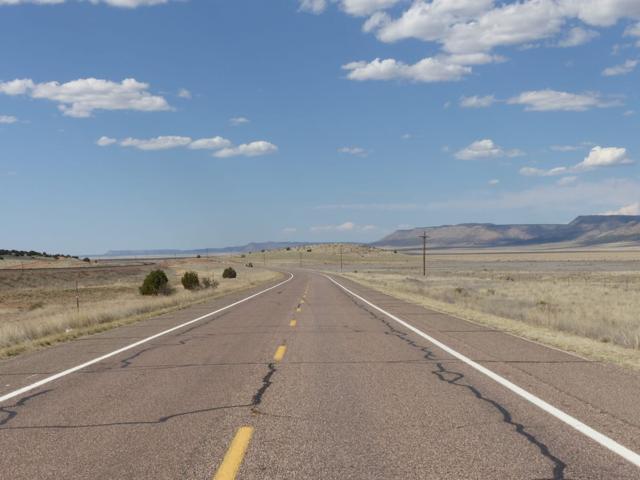
Activities: We traveled from the Valley of Fire to Death Valley. We made sure to buy groceries along the way. We learned that when you're traveling in an RV and are close to nature you sometimes have to make a detour to find a supermarket
Highlights: The kids loved the fact that we were able to buy groceries along the way. We also learned how important it is to get supplies if you are close to nature in an RV ✨

Yosemite to Death Valley - Incredible National Park Road Trip

To Death Valley with children - our experiences and route for one day
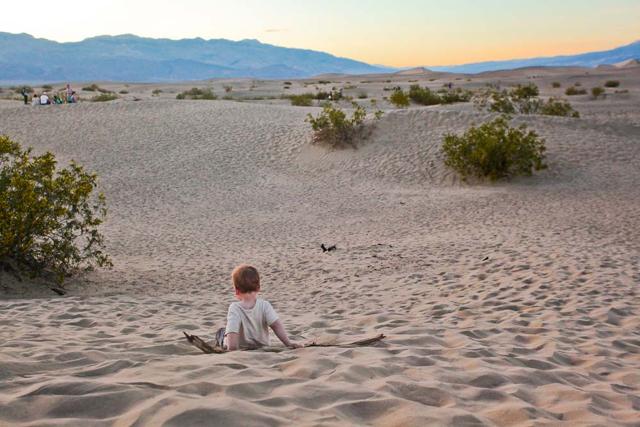
Activities: We visited Death Valley with our two-year-old son in March 2018. We drove around the park, enjoying the scenery and stopping at various points of interest. We took it easy, staying close to the car due to the heat and lack of shade
Highlights: Our son enjoyed collecting sticks. The drives were great. The article says, "The most important points and sights can be easily reached by car." ✨