 Famxplor
Wadden Sea
What to expect
The Wadden Sea is the largest unbroken system of intertidal sand and mud flats in the world, with natural processes undisturbed throughout most of the area. It is a large, temperate, relatively flat coastal wetland environment, formed by the intricate interactions between physical and biological factors that have given rise to a multitude of transitional habitats with tidal channels, sandy shoals, sea-grass meadows, mussel beds, sandbars, mudflats, salt marshes, estuaries, beaches and dunes. The area is home to numerous plant and animal species, including marine mammals such as the harbour seal, grey seal and harbour porpoise. The Wadden Sea is considered one of the most important areas for migratory birds in the world, and is connected to a network of other key sites for migratory birds. Up to 6.1 million birds can be present at the same time, and an average of 10-12 million pass through it each year. The Wadden Sea is a great place for families to visit and explore, with its unique and diverse ecosystem, and its importance in the conservation of African-Eurasian migratory waterbirds
Plan your family visit to the Wadden Sea with these blog insights 👇

Mudflat hike in Harlesiel: Safari on the North Sea
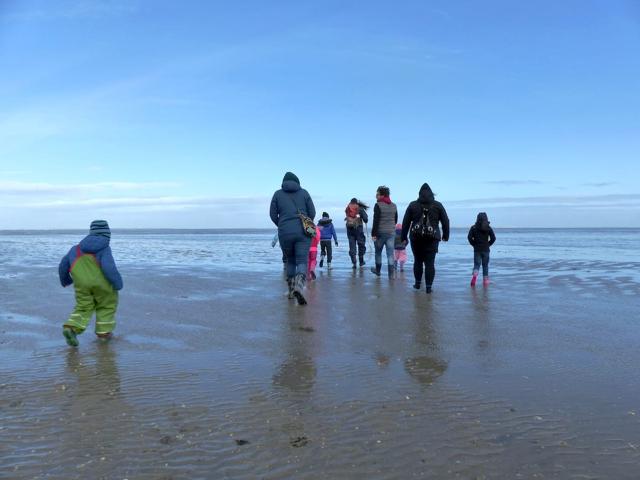
Activities: We went on a safari on the seabed in the Wadden Sea. We also saw countless geese and the noble oystercatcher with its long, thin legs. It's their 'gas station' on the way. Here they find food for their onward journey
Highlights: Kids have an eye for detail. We discovered the "Small Five" - sand worm, cockle, shore crab, sea snail and North Sea shrimp. We also saw the 'Flying Five' and learned about the tides with a certified guide ✨